
Draftsman (EFZ)

Our learning offerings consist of digital courses and the Re-use Game. They combine construction practice, sustainability, and digital tools—ready to use in the classroom and in practical training.
Project sponsorship
Plavenir
Constructa


Learning Media Architecture
Our offers
Re-Use Game
Bringing sustainability in construction to life
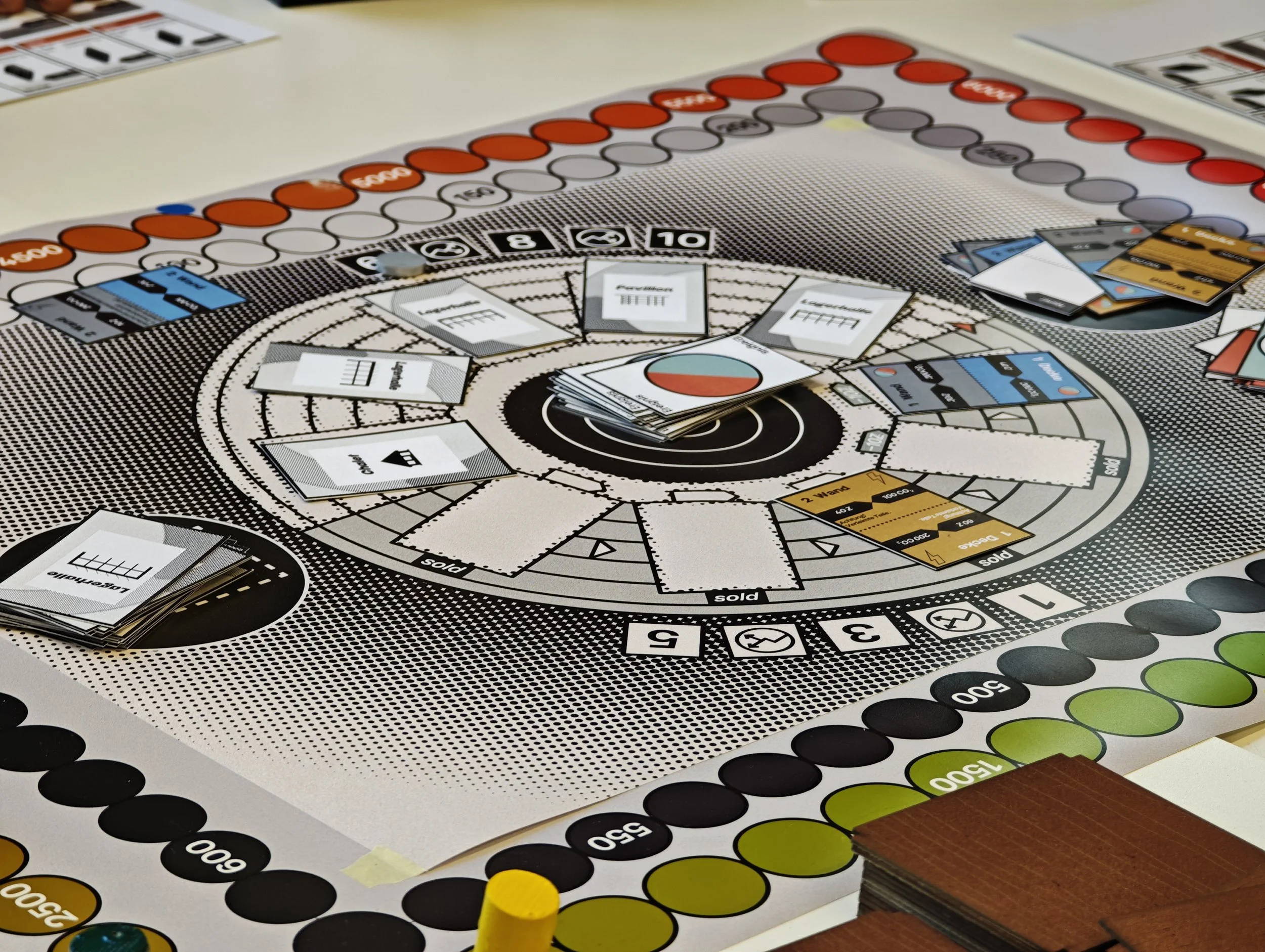
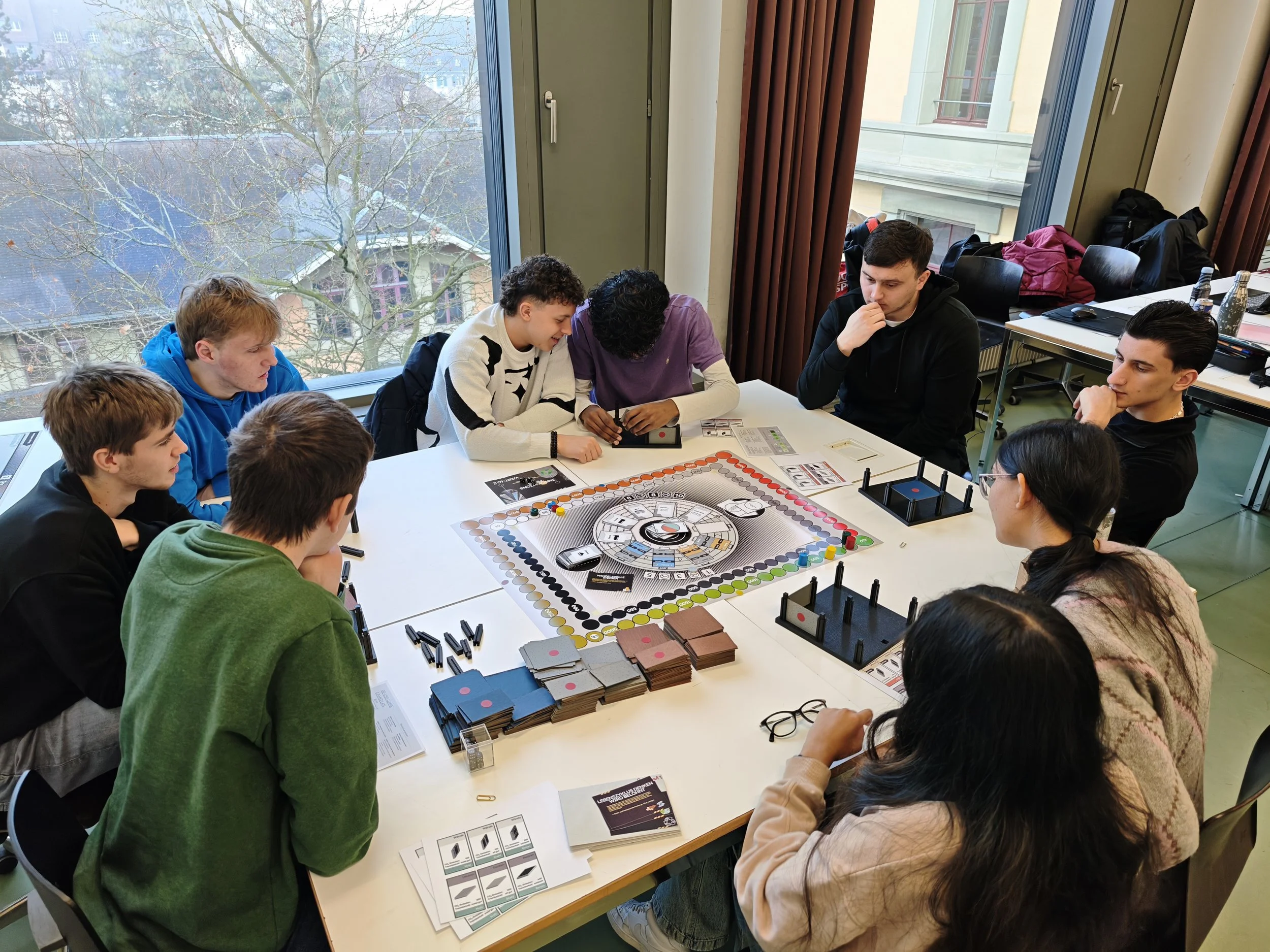
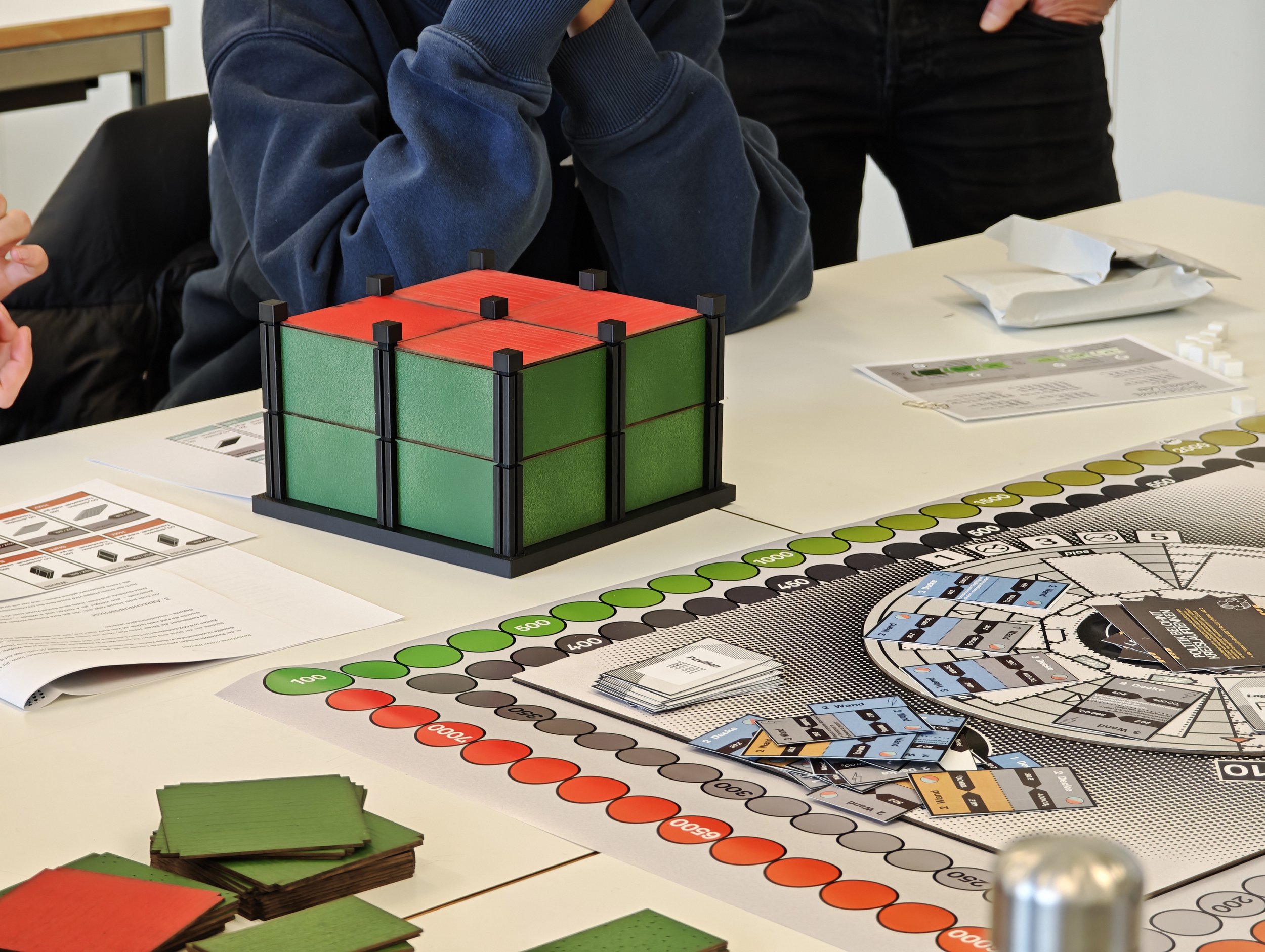
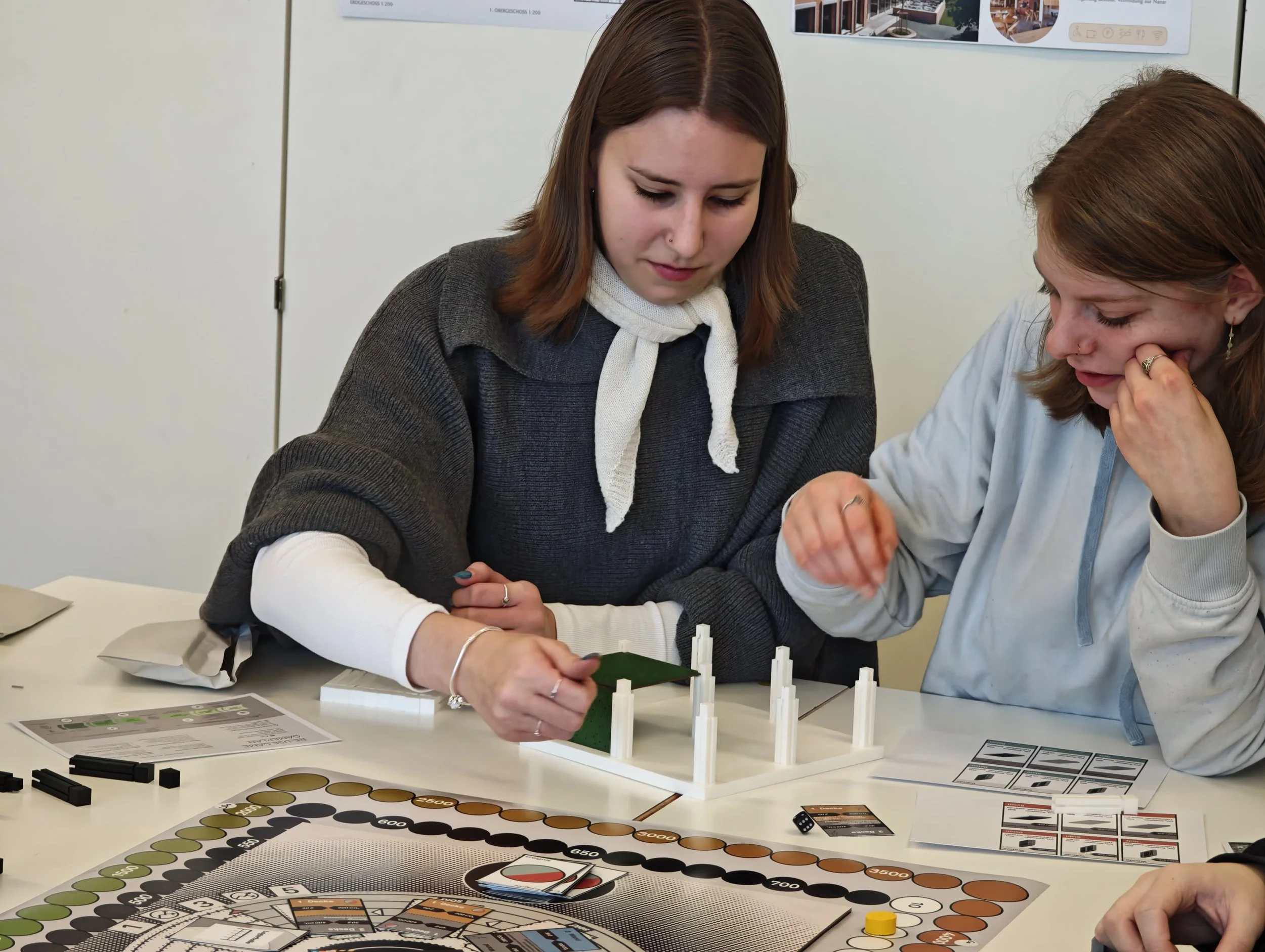
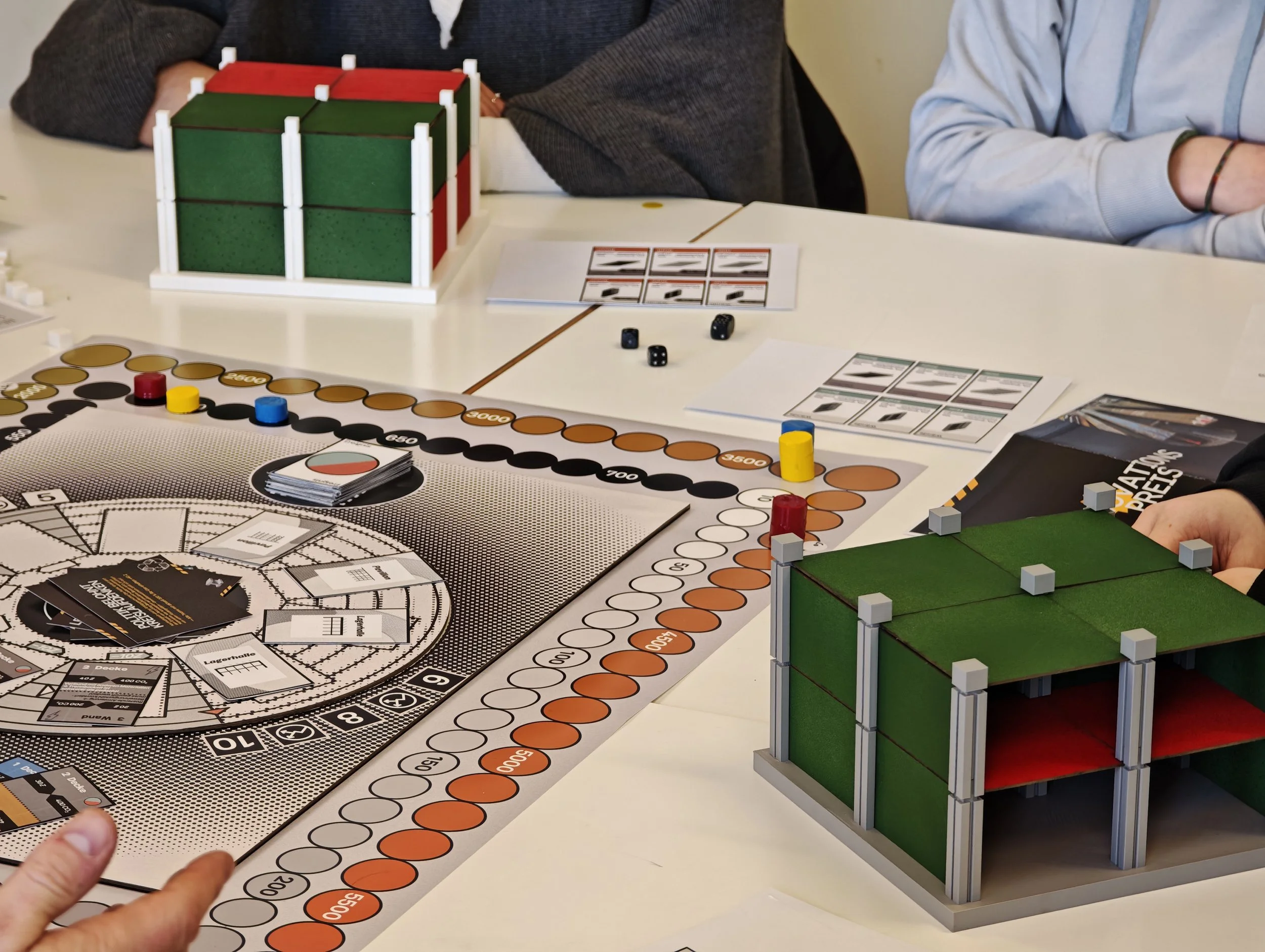
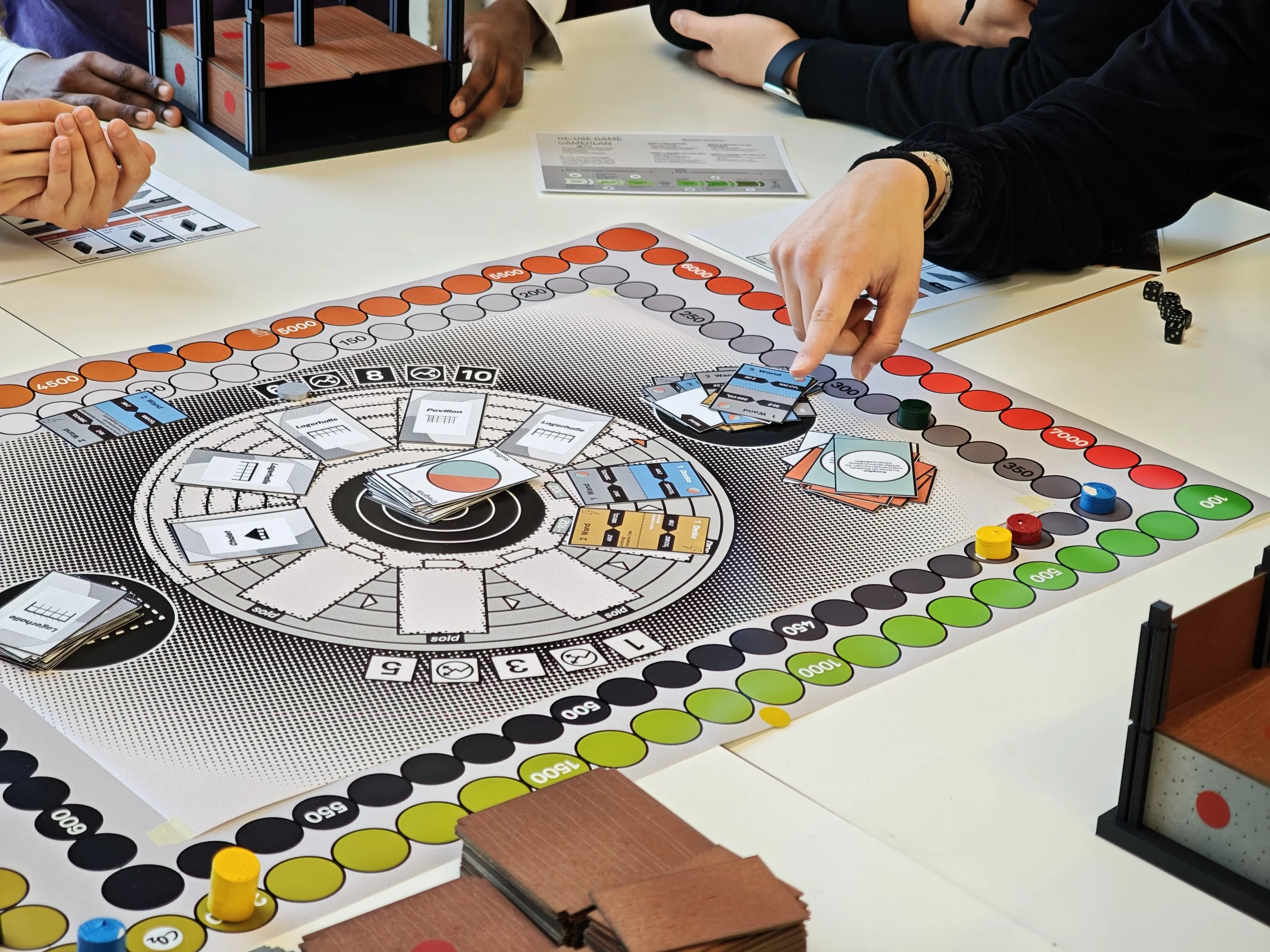
The Re-Use Game is an interactive educational game in which learners make their own construction decisions.
-
The selection of materials, reuse, and carbon footprint are not merely explained, but actively experienced, discussed, and reflected upon. This fosters a practical understanding of circular construction and the challenges encountered in day-to-day planning.
The Re-Use Game was developed in the context of vocational education and training—specifically for architectural and civil engineering draftsmen and draftswomen (EFZ)—in collaboration with Plavenir and the ZHAW.
It is suitable for use in vocational training centers, vocational schools, continuing education programs, and design firms.
This format bridges the gap between theory and construction practice—it is concrete, tangible, and closely aligned with real-world decisions.
-
Playing time
Approx. 90 minutes of gameplay
+ brief introduction & group debriefing (knowledge transfer)Use
Classes, inter-school training, continuing education, workshops
Group size
6–8 participants
Languages
German (French and Italian coming soon)
-
Participants will be able to,…
…to explain the difference between new and reused components and compare their impact on the life cycle assessment.
…to distinguish between components made of wood, concrete, and steel in terms of their properties and reusability.
…to make well-informed decisions as a team and to incorporate different perspectives into the decision-making process.
…weigh the environmental and economic impacts of material and procurement decisions and make informed decisions.
Highlights
What teachers say
“The Re-Use Game was a great way to explore the topics of reuse and sustainability in a fun and engaging way. The students were able to see how individual decisions affect a building’s environmental footprint.”
Sandra Flury, Certified Architect (HTL) & Vocational School Instructor, BBZH

“Through the Re-Use Game, students were able to explore sustainability and reuse in a playful way. It was particularly valuable that they realized how significantly individual choices regarding materials and design decisions influence a building’s environmental footprint.”
Daniel Stähli, Bachelor of Architecture (FH), vocational school teacher in the Canton of Bern
Partner Re-Use Game
Implementation partner

game solution
Specialist partner
ZHAW
Funding partner

Plavenir
Minerva Foundation
Ernst Göhner Foundation
FOEN
Digital Learning Solutions
Easily Integrating Sustainability and KLW into the Classroom
Our digital learning resources provide an easy introduction to the topics of sustainability and the circular economy. They can be used directly in the classroom and require minimal additional effort.
The content is structured in modules, designed to be practical, and aligned with the framework curriculum for vocational schools.
-
Vocational Studies / Industry-Specific Instruction
On-the-job training
Technical College
-
Our courses are clearly structured from a pedagogical standpoint and can be easily integrated into the classroom. They are based on the AVIVA model and promote the step-by-step development of practical skills.
The course is taught using the flipped classroom approach. Students independently learn the fundamentals through digital learning modules. In class, they then apply and expand on this content and reflect on it together.
This creates more room for discussion, practical application, and active learning.
-
a practical examination of current industry issues
Engaging learning formats instead of purely lecture-based instruction
Development of practical skills
minimal preparation and follow-up work for teachers
-
Students explore the fundamentals of sustainable construction and place the construction industry within the context of sustainable development. They recognize the responsibilities of their profession and understand how they themselves can contribute to creating a sustainable environment. An ideal introduction to a central theme of the training program.
-
Students analyze current construction methods and compare them with circular approaches. Using concrete real-world examples, they develop an understanding of how materials can be recycled and resources conserved. The course provides a solid foundation for discussion and reflection in the classroom.
-
Students are introduced to digital tools that support sustainable and circular construction. They gain insights into BIM, digital twins, and life cycle assessments, and use the Ecotool to perform simple life cycle assessments themselves. In this way, they experience firsthand how digital tools enable informed decision-making in the planning process.
What teachers say
Testimonials from education professionals who are already using Future Perfect
“The courses provide a solid introduction to the topics of sustainability and circular construction. The content helps students understand key concepts in the construction industry.”
Rita Steinmann, Certified Architect (FH), Instructor at BBZB Lucerne
“The course content is technically sound and presented in a practical manner. Sustainability and circular construction are explained in an accessible way and can be easily integrated into the students’ professional practice.”
Felix Lüthi, Certified Architect (FH), Instructor at BBZB Lucerne
Teacher Training
Teaching in a safe and practical way
Our professional development programs help educators incorporate sustainability and circular construction into their lessons in a confident and practical way.
Together with Constructa, we combine theoretical foundations with practical applications and the use of our learning modules.
Perfect as a supplement to our courses and the Re-Use Game.
Part 1: Basics & Classification
Fundamentals of Sustainable and Circular Construction
Introduction to Life Cycle Assessment
Analysis of current trends in the industry
Part 2: Implementation in the Classroom
Using Future Perfect Courses in the Classroom
Educational implementation (e.g., AVIVA)
Working with Moodle and Digital Learning Formats
Develop and test your own lesson plans
Key figures
Workshop duration
Half a day to a full day (flexible)
Target audience
Teachers at vocational schools (especially draftsmen and draftswomen with a Federal Vocational Diploma)
Availability
Availability to be determined
Project partners
Organizations we are collaborating with as part of the overall project
Specialist partner


CSD Engineers
Ecotool
Circular
Universities
ZHAW
Network partners
Cirkla
C33
Funding partner

Minerva Foundation
FOEN